
I love the variety of seasons, but fall holds a special place in my heart. There is something about the crisp air, the changing leaves, and the brilliant blue sky during harvest that makes me feel invigorated. But this past autumn brought some unexpected homestead fire safety tips—the kind you do not find in books or Pinterest-perfect blog posts. I am talking about real, unscripted moments that tested my kitchen skills, my problem-solving abilities, and even my husband’s attachment to his smartphone.
Let me share with you about our recent fire incidents. And yes, I said “incidents,” plural. Because apparently, fall 2025 decided to be the season of flames on our little homestead.
The Great Potato Fry Disaster: A Kitchen Fire Story
Picture this: a quiet mid-morning in the kitchen, and me standing at the stove attempting to make French fries for my daughter, Teva. Simple enough, right? I have done this before. In fact, I made donuts just a week earlier in memory of my dad’s traditional birthday treat—a small but meaningful way to honor him, much like I wrote about in The Pear Tree: A Tribute to My Father. (He passed a year ago, and sometimes the best way to honor someone is to make their favorite foods and remember the joy they brought to quiet moments.)
According to the National Fire Protection Association, cooking equipment is involved in almost half of all home fires and home fire injuries. Thanksgiving is the peak day for home cooking fires, but any day you deep-fry can become memorable for all the wrong reasons.
A Lesson in Overconfidence
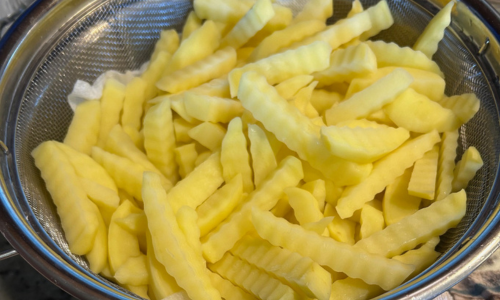
I prepared everything properly—or so I thought. I washed and trimmed the potatoes, used my trusty 7-inch crinkle-cut tool to slice them into perfect strips, and even took the extra step and patted them dry with paper towels to minimize oil splatter, which I often skip when in a hurry. That’s one of those homestead kitchen essentials you learn: excess moisture and hot oil are not friends.
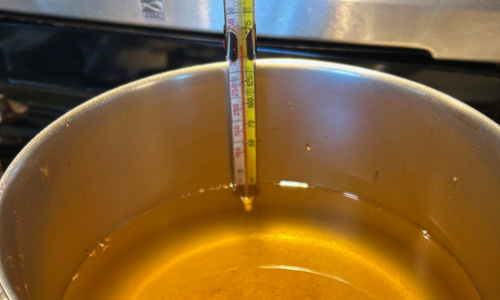
I guess my overconfidence kicked in. You see, used oil has a tendency to froth more than fresh oil—a fun little fact I’d learned from previous frying adventures. But the oil looked good, and I’d only cooked a few donuts in it. The temperature was perfect at 375°F. Everything seemed under control.
I carefully placed a few potato slices in, and the oil began to bubble. Normal. I added another handful. The bubbling intensified. Still manageable. Then I made the critical error: “There’s room for more,” I thought, adding one final handful.
When Things Go From Sizzle to Emergency
The oil began rising. And rising. And when it reached the rim of my stockpot, it didn’t politely stop—it kept going, cascading down the outside like a very dangerous waterfall. Time seemed to slow down as my brain processed what was happening.
“This is not good,” I muttered, which might be the understatement of the year.
My training kicked in. I quickly shut off the gas stove, but when I peered underneath the pot, I saw flames still dancing merrily along the stovetop. The spilled oil was feeding the fire, and I knew it would spread wherever the oil had gone.
This is one of those simple living ideas that sounds obvious until you’re living it: never throw water on a grease fire. The U.S. Fire Administration reports that attempting to extinguish grease fires with water can cause the burning grease to splatter, spreading the fire and potentially causing severe burns.
By this time, the oil had stopped spilling over, and I was able to move the dangerously hot pot to the other side of the stove. I pulled the flour jar out of the cupboard—one of my country home organizing hacks is keeping flour accessible for both baking and emergencies—and called for Teva.
“Come see this!” I hollered. Since my children had never experienced a kitchen fire before, I knew this would be a great hands-on teaching moment!
She may have graduated from our homeschool program, but as I always say, we never stop learning. Especially on a homestead where every day brings new challenges.
The Teaching Moment
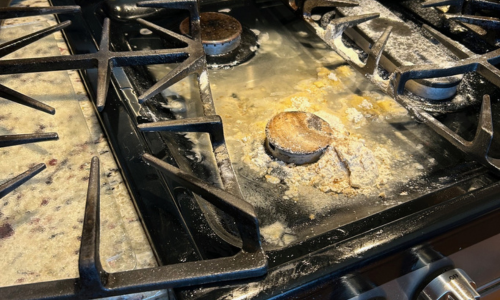
I showed Teva how to toss flour onto the flames, smothering them by cutting off their oxygen supply. Even though I have sealed burners, flour has an annoying tendency to settle into every crevice and cranny, so I knew I would be paying for this lesson with cleanup time later.
Here’s an interesting fact: flour can actually be flammable when dispersed as a fine powder in the air, which is why grain silos sometimes explode. But when used carefully to smother a small grease fire, it is effective. The key is to sprinkle it on, not throw it wildly, which could create a dust cloud. Other options include baking soda (though you need a lot) or simply putting a lid on the pan if it is still contained.
After I had the fire out, I spent the next hour cleaning up the mess. Flour everywhere. Oil residue on surfaces I didn’t even know the oil had reached. And my stove’s automatic ignitor decided this was the perfect time to stage a protest, meaning I now have to use our “firestick” (the nickname we gave our long lighter) to light the burners.
But you know what? I wasn’t about to let this derail our dinner plans.
Pivoting: The Homesteader’s Superpower
Learning to pivot is one of the most honest benefits of homestead living—the kind that builds real resilience and shapes you in ways that matter. Plans change. Equipment fails. Nature throws curveballs. And sometimes, your kitchen almost catches fire.
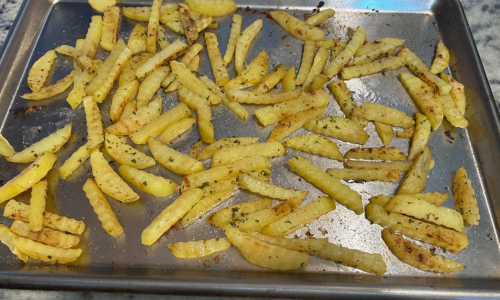
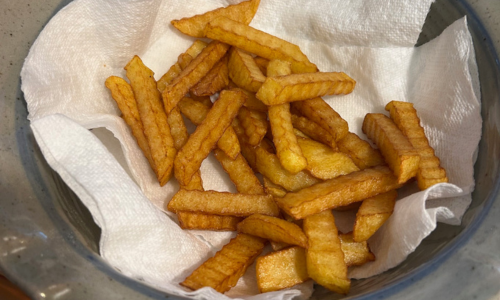
I kicked the oven on to 400°F, greased a stainless steel cookie sheet, laid out those hard-won potato slices, and tossed on a generous helping of spices—salt, pepper, garlic powder, and parsley. About 40-60 minutes later, we had the most delicious, crispy oven-baked fries I’d ever tasted.
This is now my go-to method for making potato fries. No dangerous hot oil, less mess, and honestly, they tasted even better than deep-fried ones. Sometimes the best recipes come from near-disasters.
The Science of Crispy Oven Fries
Here is why oven-baked fries can actually be superior: The Maillard Reaction, which gives food its browned, complex flavors, happens at temperatures above 300°F. At 400°F, your oven creates the perfect environment for this chemical reaction between amino acids and reducing sugars. The dry heat also allows moisture to evaporate from the potato surface, creating that coveted crispy exterior while keeping the inside fluffy.
Plus, you avoid adding excess oil. A tablespoon of oil drizzled over a cookie sheet of potatoes is far less than the quart or more needed for deep frying.
The Burned Phone: A Modern Homestead Tale
Just when I thought our fire adventures were over for the season, my husband contributed his own flame-related story. And this one is truly unique.
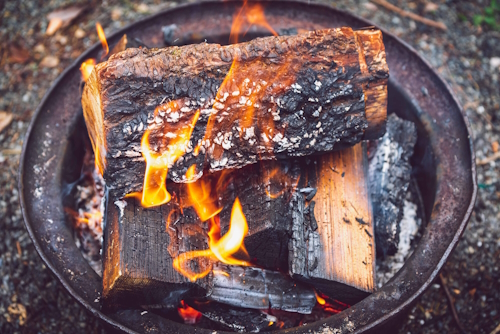
We maintain a burn barrel on our property—a practice that fits naturally into the flow of backyard homestead gardening and seasonal outdoor upkeep. One of those homesteader techniques used to manage organic debris. Throughout the year, fallen branches, twigs, and other burnable materials accumulate, and a controlled burn is an efficient way to clear them.
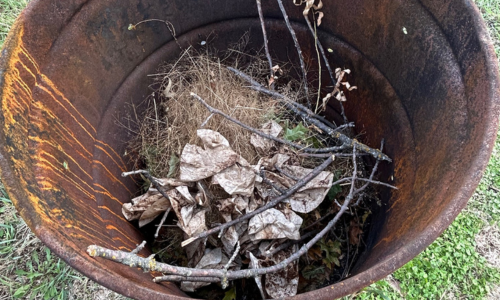
My husband was out tending the burn barrel one autumn afternoon, doing what he often does: listening to an audiobook on Hoopla through his Bluetooth earbuds. There’s something peaceful about combining physical work with a good story—it is meditation and productivity rolled into one.
Suddenly, his audiobook cut out. The Bluetooth disconnected.
He patted his jean pockets, looking for his phone. Nothing. Then he remembered—he had slipped it into his shirt pocket. He glanced down. Empty.
A sinking feeling washed over him as he retraced his steps back to the burn barrel. Peering into the flames, he saw his phone, ablaze, its back cover melting in the heat.
The Insurance Adventure
When he told me what happened, my first reaction was laughter—the kind of disbelieving laughter that comes when something so absurd happens that you can’t quite process it. My second reaction was practical: “We need to call the insurance company. Right now.”
Now, the insurance representative informed us that without physical remnants of the phone, they were unable to reimburse us. So, my husband had to go fishing in the ashes of our burn barrel for the charred remains of his smartphone.
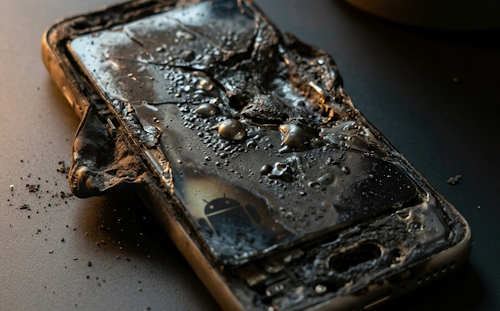
He returned a few minutes later, gingerly holding a black, disintegrating bundle between his gloved hands. I grabbed a Ziplock bag—one of those homestead kitchen essentials that has a thousand uses beyond food storage—and had him drop the crispy remains inside.
Peering at the blackened mess, I could make out the half-melted back cover and part of the glass protector. Sandwiched between these were crispy, paper-thin components that used to be a functioning smartphone. I placed it carefully in a box.
The insurance instructions also requested the charging adapter, which seemed odd until I realized they probably used a generic return form for both damaged phones and repair jobs. My husband found an old adapter that he was not using, so we tossed that in too.
The Silver Lining
Then came the surprise: a $49 deductible before they would send us the mailing label. I paid it immediately—it was Friday, and I wanted to get ahead of the weekend mail delay.
According to Consumer Reports, about 44% of Americans have damaged their phones, but only about 40% of smartphone owners actually carry insurance. Monthly premiums typically run $7-$15, and deductibles range from $29-$300 depending on the device and damage type.
Our phone was only insured for $99, but as I told my husband, a hundred bucks is a hundred bucks. To my relief, the check arrived within a week. After the $49 deductible, we netted $50 from the experience.
And the silver lining? My husband had kept my mom’s old phone—four years old but still functional. He got it working, and we ended up with some unexpected cash for our trouble.
Homestead Fire Safety: Lessons Learned
These two incidents reminded me of the most important homestead fire safety tips every country dweller should know—whether deep-frying in the kitchen or managing the burn barrel outside. Whether you are practicing sustainable home practices or just trying to make dinner, understanding fire risks is essential.
Kitchen Fire Prevention
The American Red Cross offers these statistics: cooking fires are the number one cause of home fires and home injuries, with unattended cooking being the leading cause. Thanksgiving sees three times the average daily number of cooking fires.
Here are my practical takeaways from our potato incident:
- Never fill a pot more than halfway with oil when deep frying. I thought I had adequate space, but oil expands when heated and froths dramatically when you add food.
- Keep a lid nearby when frying. The quickest way to extinguish a grease fire is to slide a lid over the pan, cutting off oxygen.
- Have multiple fire suppressants accessible. Flour worked for us, but baking soda, a fire extinguisher rated for grease fires (Class B), or even a damp towel are good options. Whatever you choose, keep it within arm’s reach—not across the kitchen.
- Never move a pot of burning oil. I was fortunate that the oil had stopped spilling and the flames were contained enough to safely relocate the pot. Generally, moving a flaming pot risks spilling fire across your floor.
- Stay in the kitchen. I know this seems obvious, but homestead meal planning often means multitasking—canning, cooking, and processing food simultaneously. Assign tasks appropriately and never leave hot oil unattended.
Outdoor Fire Safety
Our burn barrel incident highlights another set of homestead fire safety tips that are easy to overlook until something goes wrong. Here’s what we learned (and what Ready.gov recommends for outdoor fire safety):
- Empty all pockets before approaching open flames. My husband’s phone wouldn’t have ended up in the burn barrel if he’d made this a habit.
- Create a designated space for personal items. When working near fire, establish a spot at least 10 feet away where you place phones, wallets, and other valuables.
- Never burn on windy days. Wildfires spread because of three factors: fuel, weather, and topography. While we can’t control topography and fuel is necessary, we can choose calm days for burning.
- Keep water nearby. We maintain a hose within reach of our burn barrel and never burn without a water source ready.
- Use proper containers. Our burn barrel is metal, well-ventilated, and positioned away from structures and overhanging trees.
The Unexpected Gifts of Homestead Mishaps
Not all unexpected fire events are life-changing, but on our little homestead, these incidents brought some surprising benefits.
I discovered a better, healthier way to make potato fries—one that doesn’t risk turning my kitchen into a disaster zone. This new method has become part of our simple meal planning systems, especially during busy harvest season when I need reliable, hands-off cooking methods.
My husband learned the hard way to empty his shirt pocket before leaning over flames. But he also got a functioning replacement phone (albeit an older model), and we netted $50 from the insurance claim to put towards a new phone when it is time to upgrade. Plus, we now have a great story to tell at family gatherings.
And Teva got an unforgettable lesson in kitchen fire management. That’s the kind of homesteading for beginners education you can’t get from books—the real-world problem-solving skills that build confidence and competence.
Embracing Imperfection in Country Living
One of my favorite aspects of living on a farmstead are the lessons I have learned in humility. You can plan meticulously, follow instructions carefully, and still have your phone end up in a burn barrel or your dinner plans go up in smoke (almost literally).
Research on food security and self-sufficiency has found that households engaged in home food production reported greater resilience during economic uncertainties. But they also reported more accidents, near-misses, and learning experiences than traditional households.
That is because homesteading—true homesteading—involves constant interaction with elements that can be dangerous: fire, sharp tools, large animals, preserving equipment under pressure, and heavy machinery. We are not just reheating prepared meals; we grow, raise, harvest, preserve, and cook food from scratch. Homesteaders also manage waste through burning, composting, and recycling—and yes, sometimes we encounter unexpected visitors too, as I wrote about in The Spider Dilemma: A Homesteader’s Viewpoint. We also fix equipment, build structures, and solve problems on the fly.
Every mishap is a story. Every near-miss is a lesson. And every disaster averted is a reason to celebrate.
Homestead Fire Safety Tips: A Practical Checklist
Based on our adventures and subsequent research into country home organizing hacks for safety, here’s a checklist I now keep in my kitchen:
Kitchen Safety
- Fire extinguisher (Class B for grease fires) mounted and accessible
- Baking soda in a large, easy-to-grab container
- Pot lids stored near the stove
- Oven mitts that cover wrists and forearms
- Clear path from stove to sink
- No flammable items (towels, papers, curtains) near cooking surfaces
- Working smoke detector in the kitchen or the adjacent hallway
- A “firestick” or long lighter if igniters are temperamental
- Regular cleaning of the stove, oven, and hood to prevent grease buildup
Outdoor Fire Safety
- Burn barrel away from structures (minimum 25 feet)
- Water source within 50 feet
- Weather check before burning (wind speed, humidity, drought conditions)
- Designated area for personal items (away from fire)
- Long-handled tools for tending fire
- Proper footwear (no open-toed shoes)
- Someone aware you’re burning (never burn alone)
- Local burn ban check (varies by county and season)
General Homestead Fire Prep
- Working smoke detectors on every level
- Carbon monoxide detectors if using wood heat
- Fire escape plan practiced with family
- Important documents in fireproof safe or off-site
- Adequate homeowners insurance (verify coverage terms)
- Phone tree for emergencies (cell service can be spotty)
- First aid kit accessible and stocked
Autumn’s Unexpected Wisdom
As the autumn days grow shorter and we prepare our homestead for winter, I find myself reflecting on these fire incidents with gratitude. Yes, gratitude—even for the moments of panic, the hour of cleanup, and the hassle of insurance claims.
These experiences embody what I love about simple living ideas and the homesteading lifestyle. Life here isn’t Instagram-perfect every day. It’s real, messy, occasionally scary, and absolutely authentic
We make mistakes; we learn from them; and we laugh about them later (sometimes much later). And we become more competent, more confident, and more connected to the practical skills that sustained our ancestors.
My grandmother never needed a YouTube tutorial to know how to handle a kitchen fire. My grandfather didn’t panic when equipment broke or plans changed. They lived with an intimate understanding of risk, reward, and resilience.
That’s what I’m cultivating here on our homestead—not just vegetables and animals, but that same practical wisdom. And if it comes with a side of burned French fries and a melted smartphone, well, those are just the tuition fees for the education.
Looking Forward: Winter Fire Safety
As we head into winter, homestead fire safety tips take on a new priority with wood stoves, space heaters, and more indoor cooking all adding potential risks, which means more precautions.
But that’s a story for another day—one I’ll hopefully be telling from the safety of a well-maintained, fire-incident-free winter season.
Though knowing our homestead, there’s probably another adventure waiting just around the corner. And you know what? I’m okay with that. Because every challenge is a story, every problem is a puzzle, and every solution makes us a little more capable of living this beautiful, messy, wonderfully imperfect homestead life.
Final Thoughts: The Real Cost of Self-Sufficiency
What is homesteading really about? It’s not just about growing food or raising animals. It’s about accepting responsibility for your own well-being—including learning to handle the emergencies that inevitably arise.
The real cost isn’t measured in dollars spent on equipment or hours invested in labor. It’s measured in mistakes made, lessons learned, and confidence earned. It’s the price of independence, paid in experience rather than currency.
My crispy oven fries? They’re more than just a recipe. They’re evidence of adaptation, proof that when Plan A goes sideways, Plan B can be even better.
My husband’s charred phone? It’s a reminder to stay present, to not let technology distract us from the task at hand, and to always, always check your pockets before leaning over open flames.
These autumn fires gave us the most practical homestead fire safety tips we have ever learned the hard way and not soon forgotten. They reminded us why we keep flour accessible, why insurance matters, and why preserving not just our food but our family recipes and traditions grounds us in something bigger than any single mishap.
So here’s to the mishaps, the near-misses, and the moments when everything almost goes terribly wrong but somehow works out okay. Here’s to learning from our mistakes, laughing at our blunders, and building the skills that make us resilient.
And here’s to autumn—beautiful, unpredictable autumn—with all its fires, lessons, and unexpected gifts.