

Autumn holds a special place in my heart. There is something wondrous about watching the leaves transform into a symphony of reds, oranges, and yellows against a brilliant blue sky. This is the season when all the hard work of spring and summer comes to fruition—literally. Harvest time brings a sense of accomplishment, connection, and occasionally, complete surprise.
This particular autumn delivered both reminiscence and unexpected lessons about letting go of control, accepting help, and embracing outcomes that look nothing like our original plans. It also reminded me why homestead garden planning sometimes needs to include a hefty dose of flexibility and humor.
A Trip Down Memory Lane: Corn Harvest at the Family Farm
A few days after my daughter Teva and I ventured north to deliver two half-grown feral kittens to my niece—a six-week taming adventure worth its own story—my sister Becky and I made a pilgrimage to the family farm. Our oldest brother now works the land that our father tended before he passed away last year. Carl was in the process of taking over operations when Dad died, and watching him now in the driver’s seat of Dad’s combine brought a mix of emotions.
We had not participated in a corn harvest in quite a few years. Life gets busy, distances feel longer, and before you know it, traditions slip away. But this year, we made the effort, and I am so glad we did.
The Fall Harvest
According to the USDA National Agricultural Statistics Service, corn remains one of America’s most important crops, with over 90 million acres planted annually. The United States produces about 32% of the world’s corn supply, making harvest time a crucial economic period for thousands of farming families like ours.
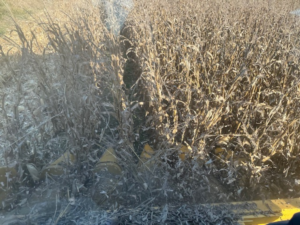
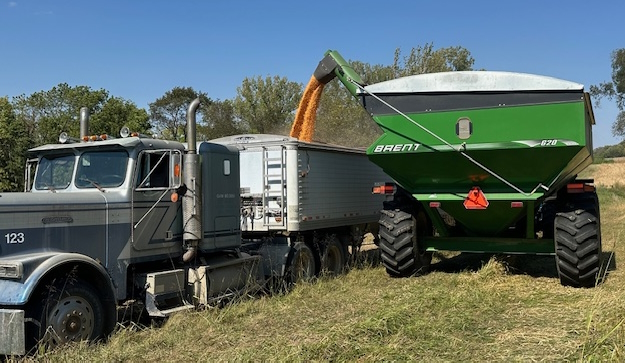
However, statistics do not capture the inherent experience of harvest—the dust in the air, the roar of machinery, the brown, golden sea of corn stretching to the horizon, the satisfaction of watching grain flow into the truck bed like liquid sunshine.
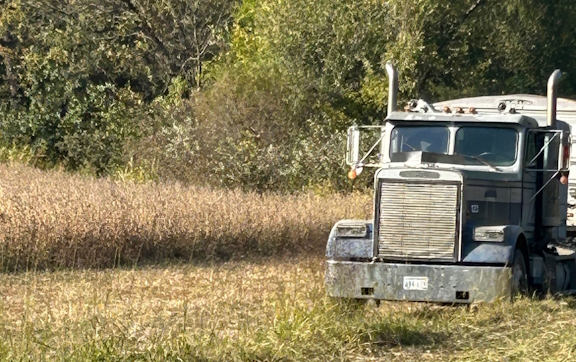
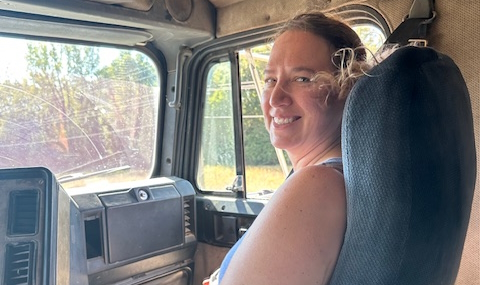
Becky and I were able to ride along in the semi-truck to haul corn to the elevator on the edge of town. Even though it was noisy and warm inside that cab, we managed to have an enjoyable conversation, shouting over the engine noise and laughing at shared memories. There is something about being together in that truck, bouncing along gravel roads with thousands of pounds of corn behind us, that felt like coming home.
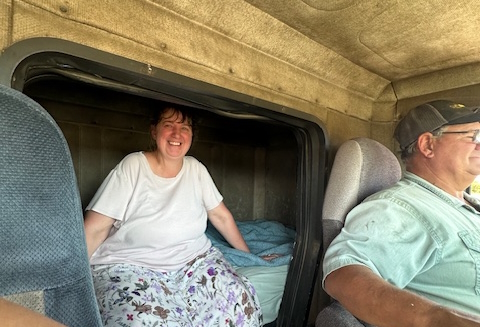
When we got back to the field, Becky was shown how to turn on the combine and run the moving parts so Carl could grease everything. Watching my sister—who now lives in town and works a conventional job—confidently operating farm equipment reminded me that these skills never really leave you. They are encoded in muscle memory, waiting to resurface when needed.
Then it was my turn, and I was privileged to ride in the combine for the first round. The steps were almost straight up and down, and I will admit that climbing into that New Holland felt like scaling a small building. My knees are not what they used to be, and I found myself grateful for the sturdy ladder. Once inside that air-conditioned cab, watching the corn head devour rows of stalks, it was quite enjoyable.
A Well-Oiled Machine
Modern combines can harvest about eight rows of corn at a time and process approximately 200-300 bushels per hour, depending on conditions and equipment size. The technology has advanced dramatically since my childhood, when harvest took significantly longer and required more manual labor.
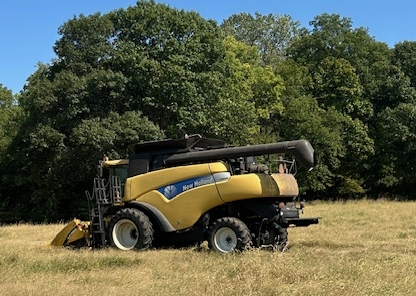
We took turns riding in the cab that lovely afternoon. I waved at my nephew’s children as they passed by in the tractor pulling the grain cart. The combine dumped its golden treasure into their cart with mechanical precision, corn kernels flowing through augers. The children waved back enthusiastically, their faces lit with the same excitement I remember feeling at their age.
This is one of the benefits of homestead living that often goes unmentioned: the way agricultural work connects generations. Those children are learning the rhythms of planting and harvest, the cooperation required for large-scale operations, and the satisfaction of bringing in a crop. These lessons will serve them whether they choose farming or any other path in life.
We left at dusk, the sun painting the sky in shades of pink and orange as we drove away from the field. We ate at a restaurant in town before heading home, our conversation flowing easily, punctuated by comfortable silences. It was a lovely day, one that reminded me of my roots and reinforced why I value the homesteading lifestyle, even on a much smaller scale than that farm operation.
The Garden That Was Not: A Confession
About a week after our farm excursion, reality set in at our own homestead. I have a confession to make, one that feels almost shameful to admit as someone who writes about homesteading and self-sufficiency: I did not feel up to doing a garden this year.
There. I said it.
There were so many chores to handle, and now that Teva is working full-time, she is unable to help me the way she did in previous years. Plus, this year has been particularly challenging. I have been dealing with fatigue, various parts of my body hurting, and emotional pain as well. Grief shows up in unexpected ways, and apparently, one of those ways is garden paralysis.
According to research on caregiver burnout and grief, physical exhaustion and emotional overwhelm can significantly impact daily functioning, including the ability to maintain previous routines and responsibilities. I was experiencing this firsthand, though I did not have the vocabulary for it at the time.
The Tilling Wars
When my husband asked me when I was going to start the garden, I put him off and said, “Not yet.” I knew I should care more, and I knew our family would benefit from fresh vegetables. I also knew the garden plot sitting empty represented a failure of sorts. But I could not muster the energy or motivation.
When my husband took the tiller to the garden without my input, I was not happy. This was my domain, my project, my responsibility. His well-intentioned action felt like criticism, like evidence of my inadequacy.
When the weeds began to grow in the bare ground and take solid root, he was not happy. The neatly tilled rows were disappearing under a carpet of green invaders. Still, I made no effort to plant. I watched those weeds reclaim the space with a strange detachment, as if observing someone else’s neglected garden.
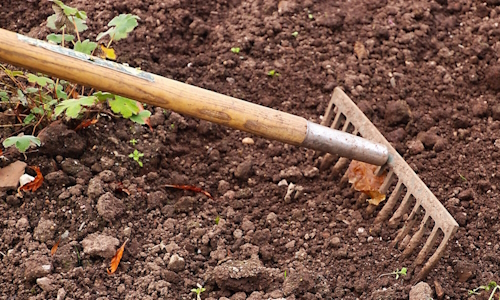
My husband took the tiller through the garden a second time. I informed him that I was probably not going to have a garden this year. I expected relief at naming this truth but instead felt only emptiness. The weeds again took hold, their roots diving deep into the freshly disturbed soil.
A third time my husband tilled up the ground, and it lay bare, waiting. Hopeful. Reproachful.
The Surprise Garden
A few days later, I looked out to see neat, hilled rows—much neater than I have ever made, if I am being honest. My husband had placed cattle panels next to the hilled areas with metal posts at either end. And he had planted seeds.
I was surprised. No, I was shocked to see this evolution. In our 33 years of marriage, he has not really tended to the garden, let alone planted in it. The garden has always been my territory, my hobby, my contribution to our household food security.
This is where I could have graciously accepted his gift of labor and love. Instead, feeling guilty, I bought some bell pepper and tomato plants at a local nursery, as if to prove I was still capable of participation. Unfortunately, the tomatoes were much too large to transplant properly, so their growth was stunted for the majority of the growing season. I did manage to harvest a few bell peppers, but they were a sad testament to half-hearted gardening.
Meanwhile, my husband’s efforts thrived. His yellow summer squash was prolific, producing more squash than our small household could consume. He also thought he had planted an assortment of melons—watermelons, cantaloupes, maybe some honeydew. He was looking forward to sweet, juicy melons in late summer.
Plot Twist: The Pumpkin Invasion
As it turned out, most of the garden was covered in pumpkins. Not melons. Pumpkins. Lots and lots of pumpkins.
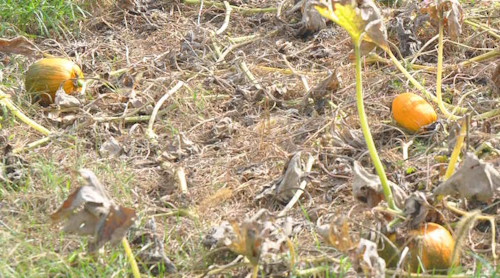
In fact, pumpkins are incredibly vigorous growers and can spread 50 to 100 square feet if given space and favorable conditions. A single pumpkin plant can produce 2-5 pumpkins per vine, though smaller varieties tend to be more prolific. Clearly, my husband’s garden was prime pumpkin real estate.
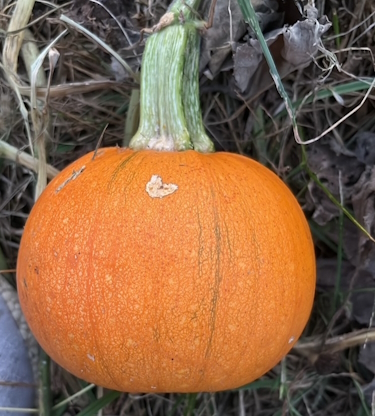
They were small and mini in size, but beautiful. Perfect little orange orbs scattered throughout the garden like jewels in a treasure hunt. However, I was a bit concerned that my husband had not yet begun to pick them, even though they appeared ripe for about a week.
In homestead garden planning, timing is everything. Pumpkins should be harvested when they have reached their mature color, the rind is hard (you cannot easily pierce it with your fingernail), and the stem has begun to dry and turn brown.
Leaving them too long invites pest problems, which is exactly what we discovered.
The Squash Bug Situation
One evening, as the golden autumn light slanted across our property, I noticed the squash bugs. They were not just on the plants—they were thick on many of the orange orbs themselves, clustering in dark masses on the pumpkin skin.
Squash bugs (Anasa tristis) are one of the most frustrating pests for homesteading beginners to manage. These shield-shaped insects are about 5/8 inch long, brownish-black, and absolutely devastating to cucurbit crops (guard-type plants). They pierce plant tissue and suck out the sap, causing leaves to wilt and die. According to extension service research, they can destroy entire pumpkin and squash plantings if left unchecked.
My son Joey said he needed something to get the bugs off. I whipped out my gloves from my back pocket—because what self-respecting homesteader does not carry work gloves everywhere?—and we went to battle.
With each of us using one glove, we began picking pumpkins and smashing as many bugs as possible. It was not elegant or environmentally sophisticated, but it was effective. Sometimes the best pest control is simply manual removal, which sounds nicer than “squishing them with your gloved hands until the threat is neutralized.”
The Harvest Rush
The sun had set, and we were quickly losing light. The urgency added an almost frantic energy to our work. We got the little red wagon—one of my favorite tools and toys, proving that some childhood pleasures never fade—and filled it full of little pumpkins.
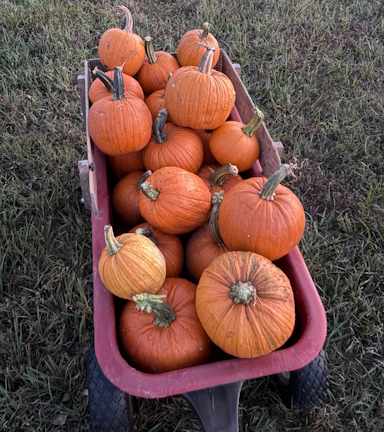
It was completely dark when we finished. We worked by feel as much as sight in those final minutes, our hands knowing the shape of ripe pumpkins, the rough texture of squash bug shells, and the weight of the loaded wagon.
I was amazed at how many pumpkins we had harvested: easily three or four dozen. Some were too old, and the stems fell off when we picked them. Some of the bugs had already begun to eat, leaving soft spots and holes. Those were thrown to the chickens, who investigated them with interest but ultimately rejected them. Even chickens have standards.
Finding Homes for an Unexpected Bounty
Joey contacted his friends from work. The next day, he and Teva delivered 15 of our pumpkins to their coworkers. This is one of those simple living ideas that builds community: sharing unexpected abundance with the people in your circle.
My husband said this variety was supposed to be a pie-baking pumpkin. However, since the chickens were not eating them—even though I broke several open to make the flesh accessible—I decided we did not need to try eating them either. I trust the chicken’s judgment in these matters. If chickens will not eat something, I am generally not interested in putting it on my own plate.
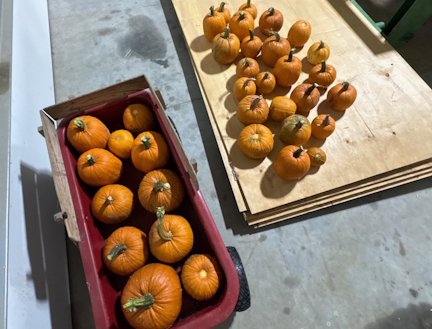
Not all pumpkins are created equal for pie-making. Sugar pumpkins, or pie pumpkins, are smaller (2-8 pounds), sweeter, and less fibrous than jack-o’-lantern varieties. The flesh is finer-grained and less watery, making better pies. Jack-o’-lantern pumpkins are bred for size and carving ease, not flavor. We apparently had something in between—decorative but not particularly edible.
The Persistent Pests
I took the remaining two dozen pumpkins out of the shop, where the daytime heat was considerable, and placed them in the little chick pen. This pen is located fairly close to the garden, but I did not know if the bugs would travel that distance to find pumpkins that were no longer on the vine.
A few days later, I checked. Sure enough, those squash bugs were hanging out on the harvested pumpkins. Squash bugs are remarkably persistent creatures. They can detect their host plants by smell and will travel to find them. They also overwinter as adults in plant debris, emerging in spring to start the cycle again. This is why seasonal home organizing tips for homesteaders always include thorough fall cleanup—you are not just tidying; you are disrupting pest life cycles.
I boxed up the remaining pumpkins and took them to our church Wednesday evening, dropping them off at the door with a note inviting people to take what they wanted for fall decorating. They were gone that night, welcomed into homes where they would bring autumn cheer without the burden of pest management.
Lessons from an Unplanned Harvest
In the end, we had an amazing pumpkin harvest, even if that was not the original plan. Actually, especially because it was not the original plan. This experience taught me several valuable lessons about small-space homesteading tips and life in general.
Lesson One: Accept Help, Even When It Hurts
My husband’s decision to plant the garden when I could not was an act of love, not criticism. Accepting help is harder than it should be, especially when that help highlights our limitations. My stubborn pride wanted to maintain control over “my” garden, even if that meant having no garden at all.
Learning to receive assistance gracefully is an ongoing challenge. But watching my husband’s pumpkins thrive while my guilt-driven pepper plants struggled taught me something important: sometimes the best contribution is stepping aside and letting others contribute their strengths.
Lesson Two: Nature Has Its Own Plans
We thought we planted melons. We got pumpkins. This might have been a seed packet mix-up, mislabeling, or cross-pollination from a previous season. Cucurbit cross-pollination can produce some interesting results, though it does not affect current fruit—only seeds saved from those fruits.
Either way, the garden produced what it wanted to produce, not what we intended. There is a metaphor here about control and acceptance that I am still processing.
Lesson Three: Abundance Finds Its Purpose
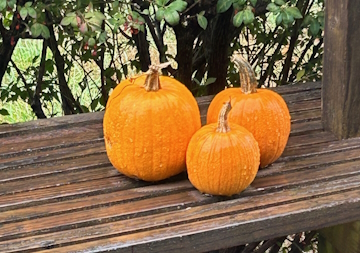
We did not need four dozen small pumpkins. But our coworkers, friends, and church community apparently did. What seemed like an overwhelming surplus became a blessing to share. This is one of the benefits of homestead living that consistently surprises me: the way excess production creates opportunities for generosity and connection.
Lesson Four: Sometimes Good Enough Is Good Enough
My husband’s rows were neater than mine have ever been. His squash production exceeded anything I have managed. But his garden also required zero angst, no Pinterest consultations, and minimal obsessing over soil amendments or companion planting schemes.
Sometimes good enough—or in this case, better than good enough—is exactly what the situation requires. Perfectionism is exhausting. Competence paired with consistency beats elaborate plans hampered by execution paralysis.
The Broader Context: When Homesteading Gets Hard
This autumn’s experiences—the bittersweet farm visit, the garden I could not plant, and the unexpected pumpkin abundance—all happened against the backdrop of grief and adjustment. My father died a year ago, my daughter started working full time, and my body decided to protest decades of hard use. Life changed, as it inevitably does.
Research on sustainable agriculture and small farm operations consistently shows that successful homesteading requires adaptability. Farms and homesteads that survive multiple generations are not the ones with perfect plans; they are the ones that adapt to changing circumstances, health challenges, economic pressures, and environmental conditions.
When I write about homesteading and organizing, I try to be honest about both the joys and the challenges. The Instagram-perfect version of homestead life is a smokescreen. Real homesteading involves failed gardens, pest infestations, animals that die, equipment that breaks, bodies that wear out, and spirits that occasionally need propping up.
But it also involves pumpkins that appear when you expected melons, family members who plant gardens when you cannot, children who help harvest in the gathering darkness, and communities that welcome your surplus with gratitude.
Looking Forward: Next Year’s Garden
As I write this in early October, I am already thinking about next year’s garden. My husband has proven himself a capable gardener, which takes pressure off my shoulders. Maybe we will collaborate more intentionally, combining his practical approach with my accumulated knowledge.
I am also thinking about homestead garden planning in a more realistic way. What if I accept that some years I cannot manage a large garden? Or, what if I build in buffers for fatigue, grief, and the general unpredictability of life? What if I design systems that do not depend entirely on my energy and effort?
These questions feel important, not just for my own homestead but for anyone pursuing simple living ideas in a complex, demanding world. Sustainability—true sustainability—includes sustaining ourselves, not just our gardens and animals.
Final Thoughts: The Gifts of an Unplanned Season
This harvest season taught me that sometimes the best outcomes emerge from released expectations. My perfect garden plan, if I had managed to execute it, would have produced exactly what I intended. But it would not have revealed my husband’s hidden gardening talents. It would not have created opportunities to bless dozens of people with free pumpkins. It would not have taught me about accepting help and releasing control.
The corn harvest with my brother and sister reminded me where I came from—generations of farmers who worked this land, adapted to challenges, and passed down both skills and values. That connection grounds me, especially during difficult seasons.
The unexpected pumpkin bounty reminded me that abundance takes many forms, not all of them planned. Sometimes the best harvests are the ones we never saw coming.
And those squash bugs? They reminded me that even in the midst of plenty, challenges persist. Pests do not care about our grief or fatigue. The work continues, regardless of how we feel about it. But tackling that work alongside my son in the gathering darkness, filling a red wagon with imperfect pumpkins, and laughing at the absurdity of fighting bugs on crops we did not mean to plant—that felt like living fully, if not perfectly.
Harvest time is not just about gathering crops. It is about gathering lessons, gathering family, and gathering strength for the seasons ahead. This autumn’s harvest may not have looked like I expected, but it gave me exactly what I needed.
Have you ever had a garden produce something completely unexpected? Or struggled through a season when your usual routines felt impossible? Share your stories in the comments below. Sometimes knowing we are not alone in our challenges is the most valuable harvest of all.
About Home Style Hive: We believe in honest homesteading—the kind that includes failures, surprises, and gardens planted by people other than ourselves. Join our community for real stories from real homesteaders navigating the beautiful, messy reality of country living. Because the best plans are the ones flexible enough to accommodate pumpkins when you were expecting melons.